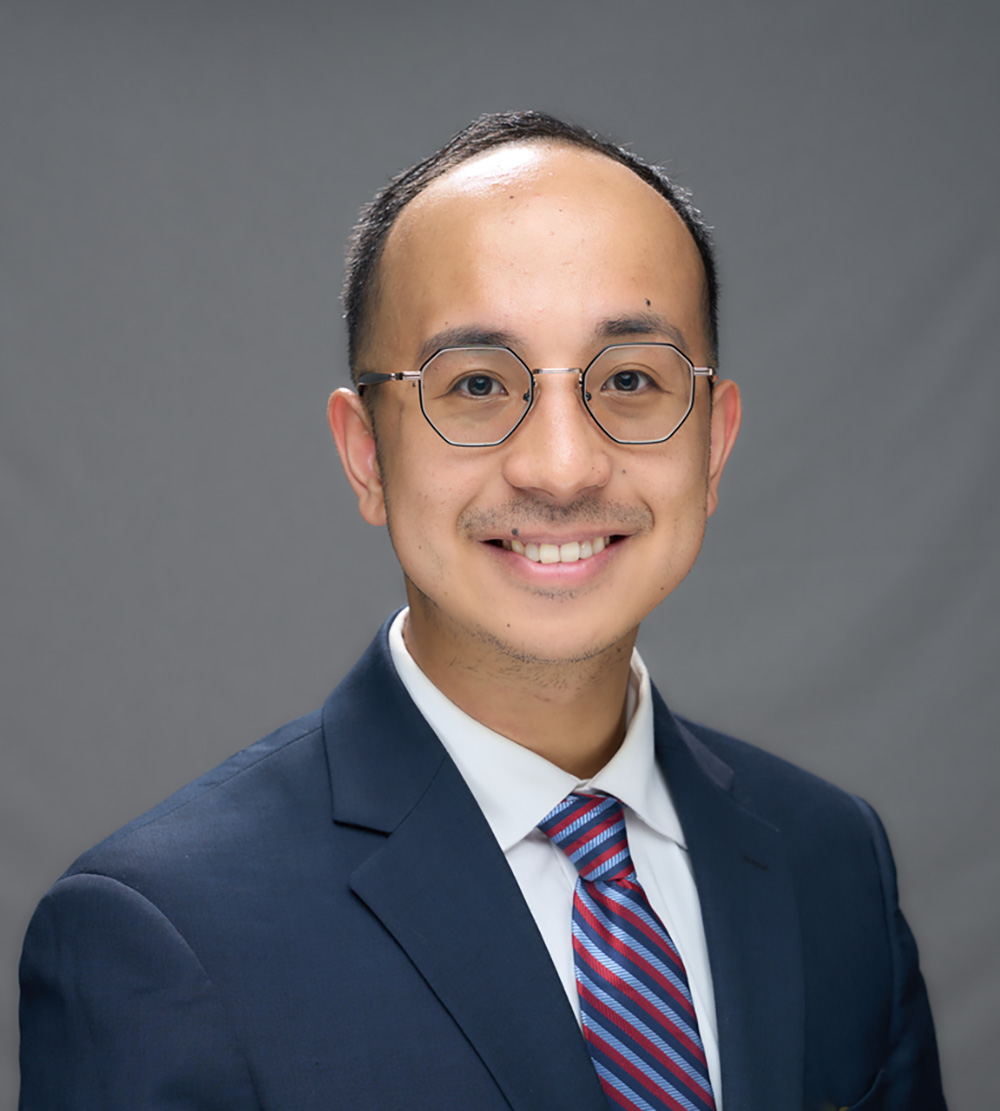
Aaron Lagoy Bautista, DO
Aaron Lagoy Bautista, DO, is a resident at the Kaiser Permanente Washington FMR Program in Seattle, WA. He is a 2026 recipient of a STFM Foundation Faculty for Tomorrow Resident Scholarship.
Dr Bautista's Family Medicine Story
Why are you interested in teaching family medicine?
Dr Bautista: The first time I realized I loved teaching wasn’t in a classroom; it was in the anatomy lab, long after most students had gone home. A classmate lingered, frustrated by the brachial plexus, and I stayed to help him trace each branch on the cadaver. By the end of the evening, he understood it; by the end of the year, I understood myself. Teaching, I realized, is not only about clarity, it is about connection.
Teaching and family medicine share the same foundation: trust. Both ask us to meet people where they are, whether that person is a patient seeking understanding or a student searching for confidence. Throughout medical school, I found meaning in the small, human moments that teaching brings. I loved staying after study sessions to walk through difficult material or sitting beside an anxious classmate before an exam to remind them that one test would never define them. Those moments showed me that education is more than the exchange of information; it is an act of service that calls for patience, humility, and empathy. As physicians, we teach daily through our tone, our presence, and the grace with which we admit uncertainty. Serving as student government president deepened my understanding of what it means to teach. Leadership, I discovered, is another form of education. The role required that I listen before speaking, act transparently, and advocate for my classmates in rooms where their voices were seldom heard. When students confided in me about burnout or self-doubt, I realized they needed affirmation more than advice. By leading with openness and sharing my own missteps, I helped foster a culture where vulnerability became strength. Over time, students began to see that asking for help was not weakness but courage.
My experiences outside the classroom strengthened that calling. Through the Community Health Track, I delivered a lecture on social determinants of health and worked with the Pomona Pride Center mentoring LGBTQ+ youth. Those encounters revealed that teaching can extend beyond textbooks; it can awaken awareness of the social and structural forces that shape health. In those moments, I saw learners begin to view medicine not merely as a science but as a means to restore dignity and justice.
Now, as a resident, I see teaching as both a privilege and a responsibility. I want to guide students not only through clinical reasoning but through the art of resilience—how to learn from failure, how to care for themselves as they care for others, and how to preserve empathy amid exhaustion. I want them to understand that kindness is not an accessory to competence; it is the essence of it.
In the anatomy lab that night, one student found his way through a tangle of nerves; I found my way toward the purpose that has guided me since. To teach family medicine is to help others find clarity in the complexity—to see connection where others see confusion—and that is a lesson I hope to pass on for the rest of my career.
How do you think you can make a difference in the future of family medicine?
Dr Bautista: The first time I walked the halls of Congress during DO Day on the Hill, I realized how powerful a physician’s voice could be. Surrounded by students and doctors from across the country, I watched family physicians advocate for policies that strengthened access and equity in care. In that moment, I saw family medicine not just as a specialty but as a movement—a bridge between policy and patient. That experience shaped how I view my role in the future of our field.
I believe the future of family medicine depends on leaders who can bridge clinical care, education, and advocacy. My goal is to be one of those leaders: someone who helps build communities of learning grounded in empathy, inclusion, and purpose. I hope to shape how the next generation experiences family medicine, ensuring they see it not only as a discipline but as a calling to serve.
My experiences in leadership and advocacy have given me a foundation for that vision. As Student Government President, I learned that leadership begins with listening and grows through humility. I represented my classmates at the 2023 AOA House of Delegates, the 2024 CAFP All-Members Advocacy Meeting, and DO Day on the Hill, where I saw firsthand how physicians can influence policy to improve community health. Later, as an AAFP Emerging Leader Institute Scholar, I researched equity in medical licensing exams, advocating for fair evaluation of osteopathic and allopathic students. Our project earned a national award, but its greatest value lay in proving that data and empathy together can drive lasting change. Academic leadership, I realized, can transform not only curricula but also culture.
Those experiences strengthened my belief that leadership and teaching are inseparable. During medical school, I created peer-support systems, coordinated academic resources, and facilitated open conversations about burnout and belonging. I found that students learn as much from how we respond to hardship as from what we teach. That insight became personal when I failed a board exam—a moment that forced me to confront self-doubt and redefine resilience. I am better today not despite that failure, but because of it.
Being open about that experience revealed a new form of teaching: one rooted in vulnerability. Over time, I began advising students across the country who faced similar challenges. We discussed not only study strategies but also shame, recovery, and rediscovering purpose. Watching them regain confidence has been one of the most meaningful forms of mentorship I have known.
When I think back to that day on Capitol Hill, I remember standing in a long marble hallway, surrounded by people who believed that advocacy could heal communities. In my own way, I have carried that belief forward—into classrooms, clinics, and conversations with students who need to be reminded that their voices matter. If I can help others find the courage to use those voices, then I will have made my difference in the same spirit that first inspired me on that hill.
Contribute to the Creation of the Next STFM Story
Transforming the future of family medicine would not be possible without the generosity of countless STFM members and supporters. Through both member and departmental donations, the STFM Foundation is able to support the pipeline for academic family medicine.
Help transform the future of academic family medicine by donating to the STFM Foundation. If you have questions about the STFM Foundation, contact Mindy Householder at (800) 274-7928 or mhouseholder@stfm.org.