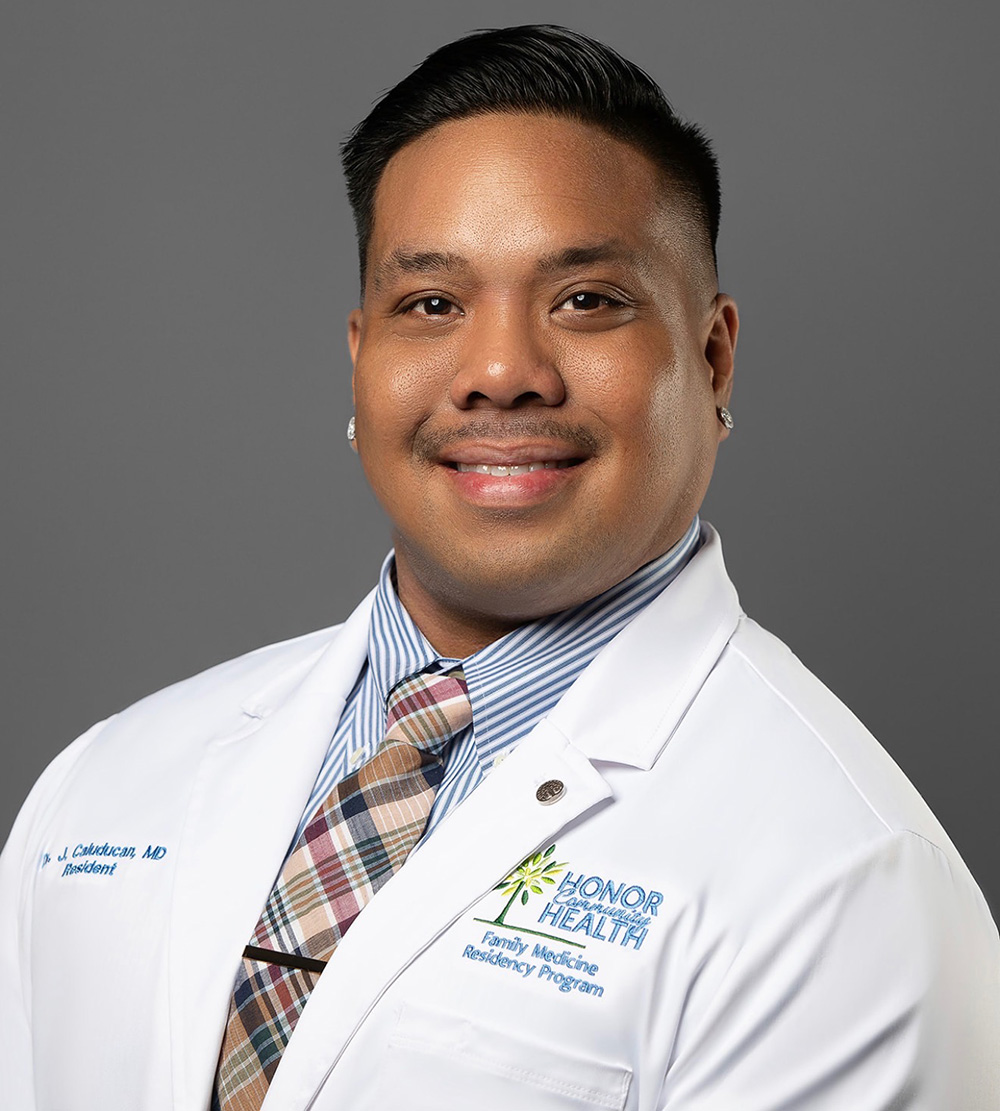
Jason Caluducan, MD
Jason Caluducan, MD, is a resident at the Honor Community Health FMR Program in Pontiac, MI. He is a 2026 recipient of a STFM Foundation Faculty for Tomorrow Resident Scholarship.
Dr Caluducan's Family Medicine Story
Why are you interested in teaching family medicine?
Dr Caluducan: From the start of residency, I realized some of my most meaningful moments came from sharing what I knew with others. Teaching family medicine has grown from something I enjoyed into something that defines who I am as a clinician. It allows me to connect with my colleagues, stay curious, and contribute to a sense of teamwork and growth that makes residency rewarding. Whether I am leading morning reports, preparing for didactics, or discussing a case in the clinic, I find real joy in making complicated topics feel understandable and practical.
During weekly didactics, I take pride in preparing engaging, evidence-based presentations that spark active discussion. My program director once told me I consistently deliver some of the best presentations in our program, a compliment that pushed me to continue growing as an educator. One of my proudest moments was being chosen to present at our organization's annual Clinician Competency Day, where all Honor Community Health clinicians gather to share new developments in family medicine. I presented a session on the May 2025 study, "Switching GLP1 Based Therapy in Adults with Type 2 Diabetes," which had recently been highlighted on UpToDate.
That presentation reminded me why I love teaching so much. It combined my love for research, my attention to detail, and my desire to make medicine relevant to daily patient care. I even reached out to the study's lead author, Dr Adrian Billings, to request permission to use figures and tables that were only accessible from the original article behind a paywall. Taking that extra step reflected my commitment to accuracy but also my genuine excitement about sharing something that could make a difference for both providers and patients.
Teaching has also deepened my understanding of the human side of medicine. As our residency's wellness committee leader, I was elected by my peers to promote mental health, work-life balance, and professional growth. Through that role, I learned that teaching is not just giving information, it is also about mentorship, empathy, and setting an example of resilience. When I was named Employee of the Month, the note from leadership read, "Jason is very good at teaching wellness management. We are very happy to have him on our team." That recognition meant more to me than any award.
My passion for teaching family medicine comes from wanting to build community and inspire others to see the field as I do: broad, compassionate, and deeply human. Joining the STFM Faculty for Tomorrow Resident Scholar initiative would give me the opportunity to refine my teaching skills, learn from mentors, and contribute meaningfully to the next generation of Family Medicine educators.
How do you think you can make a difference in the future of family medicine?
Dr Caluducan: The change I hope to advance in family medicine is a deeper and more intentional connection between the clinic and the community it serves. Throughout my training, I have seen how social and structural barriers such as food insecurity, unreliable transportation, and unstable housing make it difficult for patients to achieve lasting health. Working in Michigan's first and only Federally Qualified Health Center (FQHC)-based family medicine residency program has shown me that primary care cannot stop at the clinic door. The real work begins when we bridge medicine with the realities our patients face every day.
Caring for patients in Pontiac, MI, an underserved city shaped by decades of economic hardship and health disparities, has strengthened my belief that Family Medicine is at its best when it meets patients where they are. I have learned that access, prevention, and trust can change lives, and that every small act of connection can ripple outward into something larger.
Last July, our residency held its annual Big Journal Club, a day devoted to exploring social determinants of health and their ties to inequities such as redlining, climate injustice, and food insecurity. My group focused on the article "Food as Medicine," examining how reimagining dietary counseling could address the chronic disease burden in our community. Pontiac is classified as a food desert, where many families live miles away from affordable, nutritious foods.
Motivated by what we learned, my co-resident and I selected this issue as our quality improvement and patient safety project. We will implement the Hunger Vital Sign questionnaire in our clinic to more effectively screen for food insecurity and develop resources that connect patients with local food pantries. Working with our clinical team, we will create EMR workflows that incorporate food insecurity screening, enable providers to track outcomes over time, and streamline direct referrals to our dieticians. In partnership with our clinic’s dieticians, our overarching goal is to pair meaningful health education with access to supportive services. Our hope is that these efforts will bring together clinical care and community support in a way that makes medicine both practical and profoundly human.
These experiences have convinced me that the future of family medicine depends on community-integrated care. Addressing social determinants is not an extra task, it is central to who we are as primary care physicians. I hope to continue this work by mentoring others who share this vision. Through the STFM Faculty for Tomorrow Resident Scholarship, I am to grow as an educator, strengthen my ability to lead community-driven initiatives, and help shape a more just and compassionate future for family medicine.
Contribute to the Creation of the Next STFM Story
Transforming the future of family medicine would not be possible without the generosity of countless STFM members and supporters. Through both member and departmental donations, the STFM Foundation is able to support the pipeline for academic family medicine.
Help transform the future of academic family medicine by donating to the STFM Foundation. If you have questions about the STFM Foundation, contact Mindy Householder at (800) 274-7928 or mhouseholder@stfm.org.