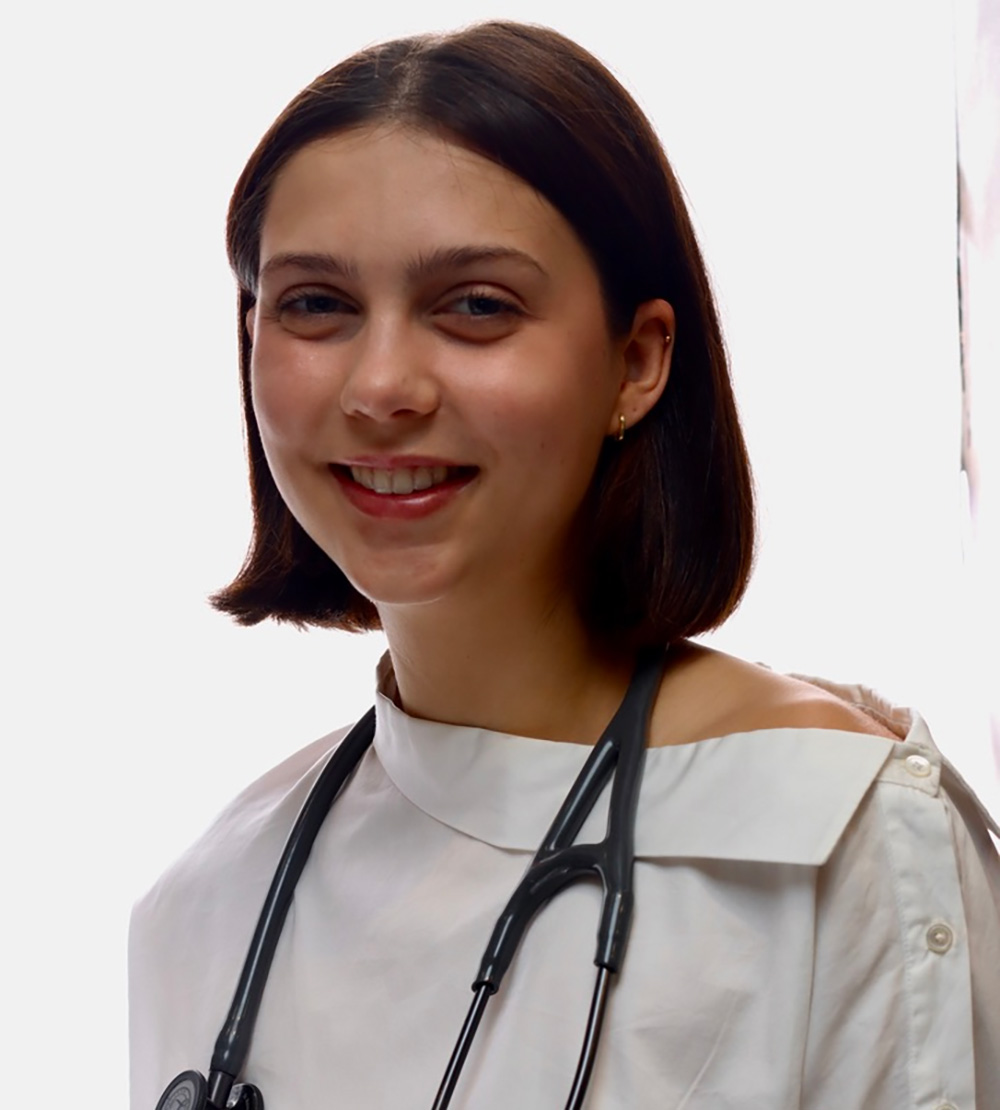
Meghan Gipson, MBBCh
Meghan Gipson, MBBCh, is a resident at the MedStar Health Georgetown University (Baltimore) FMR Program. She is a 2026 recipient of a STFM Foundation Faculty for Tomorrow Resident Scholarship.
Dr Gipson's Family Medicine Story
Why are you interested in teaching family medicine?
Dr Gipson: As a first-generation medical student, guidance from professors and teaching physicians helped me find my place within the medical field.
My first experience in medical education came during medical school; I participated in a project that focused on improving the quality of education focused on social determinants of health. Later, after discovering my passion for end of life care, I helped develop and implement a curriculum on grief, death, and bereavement for medical students at my medical school. It was through sharing my experiences as a senior medical student and helping junior students explore difficult conversations that I realized my passion for education.
While family medicine was always the place for me, my medical school rotations in family medicine solidified this choice. At my medical school, diverse didactics on conscious prescribing and hands-on learning for procedures kept me interested throughout my rotation. I had the opportunity to be taught by both residents and attendings and was always in awe of the breadth of knowledge that was being taught in both the clinic and inpatient settings. I was even more convinced by the kindness and care family medicine attendings and residents approached learners and their patients with.
Throughout residency so far, my clinic sessions and inpatient days working with medical students have been the most rewarding ones. From seeing a student do their first well child check and educating them on milestones and safety counselling, to seeing them handle a complex inpatient social situation, seeing their improvement is so uplifting. More importantly, what I appreciate most from working with students is how much I learn from them. What they have brought from other rotations and the reflections that they have on personal and patient encounters is beautiful, and it renews my appreciation for the scope and value we bring as family medicine practitioners.
I have continued to be inspired by the faculty at my program, some with the most unique styles of teaching both in the clinical setting and in didactics. I continue to implement teaching strategies and evidence based recommendations into my clinic sessions whenever possible.
I want to be a teacher in family medicine to continue the cycle of providing mentorship that was provided to me as a medical student. I also value the attitude of continual education and believe that by teaching and learning from others in a collaborative and academic setting, I will be the best doctor and most fulfilled person that I can be.
How do you think you can make a difference in the future of family medicine?
Dr Gipson: I believe I will make a difference in the future of family medicine by allowing my passions and lived experience to continually inspire the way that I teach.
In my work researching and teaching grief, death, and bereavement education when I was a medical student, I learned first-hand how valuable it is to talk about hard things with your community. By approaching the losses experienced by all of us in medicine and in our personal lives frequently and in a neutral way, we can destigmatize conversations around grief and loss and allow ourselves to experience the feelings associated with difficult situations in a professional context. To me, these types of group reflection have been an important part of maintaining humanity while practicing medicine. I believe that by encouraging this type of communication, both in structured and unstructured settings, I will have an impact on improving the ability of young physicians to manage end of life situations. With increased opportunities and skills to engage in difficult conversations, I am optimistic that levels of resident/physician burnout and “becoming jaded” due to the feeling of inadequate support will decrease.
A passion of mine is also improving the primary care physician’s ability to have goals of care conversations with patients. In the hospital setting, family physicians are uniquely equipped to have these conversations as teams that have significant continuity with their patients and see them in acute hospitalizations. However, I believe that adequate time should be made for these conversations in the outpatient setting when patients are not ill. It is generally understood that it is the primary care physician’s job to have these conversations, but too often we shy away from them because it is difficult to approach them when someone is well. In situations where I have addressed goals of care and advanced care planning in non-acute clinical encounters, the value of these conversations is palpable. I hope that as a future family medicine teacher I can help provide didactics to demystify the living goals of care discussion and contribute to an increased understanding for both physicians and patients of the future in order to minimize the burden of stress on the patient, family, and care team at the end of life.
Lastly, as a family medicine teacher, I hope to be an advocate who inspires further advocacy. I want to help residents and students feel inspired to champion the causes within medicine that they feel will have big impacts on patient outcomes and quality of life. I want to work to implement policy changes for better patient care and open avenues for the residents and students I work with to have their voices heard if they desire to.
Most importantly, I hope that as a family medicine teacher, I will impact the future by inspiring family medicine residents to pursue a career where they use their unique talents and interests to provide excellent care to their patients.
Contribute to the Creation of the Next STFM Story
Transforming the future of family medicine would not be possible without the generosity of countless STFM members and supporters. Through both member and departmental donations, the STFM Foundation is able to support the pipeline for academic family medicine.
Help transform the future of academic family medicine by donating to the STFM Foundation. If you have questions about the STFM Foundation, contact Mindy Householder at (800) 274-7928 or mhouseholder@stfm.org.