POCUS Family Medicine Education Summit
The STFM POCUS Family Medicine Task Force held a summit on August 8–9, 2025. See the goals and results of the summit.
Related STFM POCUS Pages and Programs
The STFM POCUS Family Medicine Task Force held a summit on August 8-9, 2025. Funding for this Summit was provided by the American Board of Family Medicine Foundation.The objectives of this summit were to:
- Define a vision for POCUS training in family medicine graduate medical education.
- Foster collaboration among family medicine organizations for POCUS
- Create a scalable and progressive approach to integrating POCUS training into family medicine residencies.
- Finalize competencies for POCUS training in family medicine graduate medical education
- Advance the discussion on building consensus on competency-based assessments in POCUS
Outcomes of the STFM POCUS Family Medicine Task Force Summit
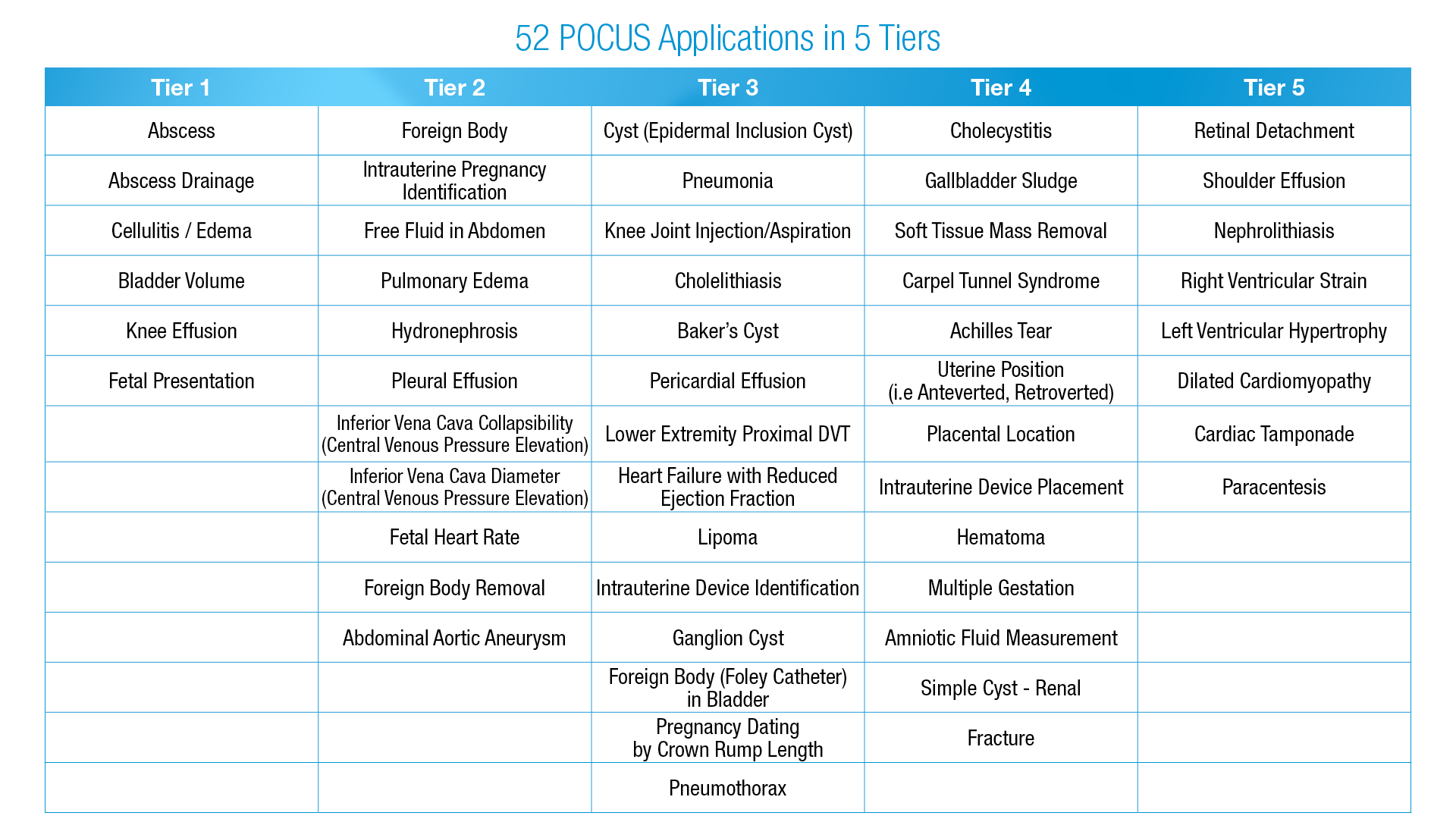
Through a rigorous, evidence-based approach using the Delphi methodology and nominal group technique the STFM POCUS Take Force identified 52 core POCUS applications that every family medicine resident should demonstrate competence by 2035. For this exercise the term application means individual POCUS images/scans for making diagnoses (i.e. pneumonia, cellulitis, etc.). To support implementation, the Task Force developed a stepwise approach, organizing these applications into five tiers based on:
- Benefit to patient management
- Relative ease of learning and achieving proficiency
- Relative ease of teaching
- Applicability across the broad scope of family medicine
- Prevalence in continuity of care settings
Tier 1 represents the starting point and should be adopted by family medicine residency programs beginning in 2027.
STFM POCUS Summit Participants
STFM FM POCUS Education Task Force
- Ryan Paulus, DO, University of North Carolina Family Medicine Residency Program, Task Force Chair
- Puja Dalal, MD, Novant Health Family Medicine Residency Program, Summit Planning Work Group Lead
- Hiten Patel, MD, Ohio State University, Competency Assessment Work Group Lead
- Juana Nicoll Capizzano, MD, University of Michigan, Curriculum Work Group Lead and Assessment Work Group
- Nicholas LeFevre, MD, MS, University of Missouri, Research Work Group Lead
- William Hui, MD, Stanford University, Research Work Group
- Natalie Nguyen, DO, Kaiser Permanente Los Angeles Medical Center, Assessment & Curriculum Work Groups
- Anthony Recidoro, DO, Naval Hospital Camp Pendleton Family Medicine Residency, Curriculum Work Group
- Joy Shen-Wagner, MD, University of South Carolina, Summit Planning Work Group
- Varshaben Songara, MD, Harnett Health, Curriculum & Research Work Groups, Association of Family Medicine Residency Directors Representative
- Johnny Tenegra, MD, Southern Illinois University, Summit Planning & Curriculum Work Groups
- Ryan Trantham, MD, Waco Family Medicine, Curriculum Work Group
Speakers
- E. Liang Liu, MD, Emory University School of Medicine, Emergency Medicine
- Irene Ma, MD, PhD, RDMS, RDCS, FAIUM, American Institute of Ultrasound Medicine, Internal Medicine
- Warren Newton, MD, MPH, ABFM President and CEO
- Nilam J. Soni, MD, MS, University of Texas Health San Antonio, Veteran Health, Critical Care
- David Tierney, MD, Abbott Northwestern Hospital, Internal Medicine
Family Medicine Leaders
- Nils Brolis, DO, FACOFP, CHSE, American College of Osteopathic Family Physicians (ACOPF) Representative, Virtua Health College of Medicine & Life Sciences of Rowan University
- Jay Fetter, MSA, American Board of Family Medicine (ABFM) Representative
- Karl "Bert" Fields, MD, CAQSM, Cone Health
- Masahito Jimbo, MD, PhD, MPH, Association of Departments of Family Medicine (ADFM) Building Research Capacity Program Vice Chair
- Amy Mulligan Kennedy, MSA, MIHE, American Academy of Family Physicians (AAFP), Manager, Resident Initiatives
- Richelle Koopman, MD, MS, North American Primary Care Research Group (NAPCRG) Representative, University of Missouri
- Karen Mitchell, MD, American Academy of Family Physicians (AAFP), Vice President Medical Education
- Donald Raj Woolever, MD, Association of Family Medicine Residency Directors (AFMRD), Board Member
- Velyn Wu, MD, MACM, CAQSM, University of Florida Health
POCUS Experts
- Paul H. Bornemann, MD, University of South Carolina, Department of Family and Preventative Medicine
- Benjamin Bryden, MD, MPH, University of Montana
- Rachel E. Carter, MD, MAS, RDMS, Uniformed Services University of Health Sciences, F. Edward Hebert School of Medicine
- Matt Chan, MD, Oregon Health Sciences University
- John Doughton, MD, University of North Carolina Chapel Hill
- Kyle Flattery, MD, Brown University
- Bradley Green, MD, Gadsen Regional Medical Center
- Jerica Johnson, MD, University of New Mexico Health Sciences
- Andrea Lewis, DO, Southern Colorado Family Medicine
- Daniela Lobo, MD, Indiana University Health, Family Medicine
- Alex McDonald, MD, CAQSM, Kaiser Permanente, Bernard J. Tyson School of Medicine
- Summer Scavone, MD, University of Virginia Family Medicine Residency
- Michael Wagner, MD, Prisma Health, University of South Carolina
- Nicholas Weida, MD, Lawrence Family Medicine Residency Program
Resident Leaders
- Brooke Hess, MD, University of North Carolina Family Medicine Residency Program
- Rosa E. Reyes, DO, MS, Michigan Medicine Department of Family Medicine Residency program
- Justin Siu, MD, MS, Keck Medicine of USC Family Medicine Residency
- Khawla Suhaila, MD, Cahaba-UAB Family Medicine residency - Highlands Track
- Michael J. Taylor, MD, Novant Health Family Medicine Residency Program
Society of Teachers of Family Medicine Staff
- April Davies, MPH (project lead), Director of Strategic Priorities and Programs
- Mary Theobald, MBA, Chief of Strategy and Innovation
- Jenni Minor, MEd, Project Manager
University of North Carolina Staff
- Philip D. Sloane, MD, MPH, Director of Academic Advancement
- Sally Bobbitt, Research Coordinator
- Sheryl Zimmerman, Associate Dean for Research and Faculty Development
Post-Summit Resources
Residency Related Guidelines and References
- 2023 ACEP Ultrasound Guidelines: Emergency, Point-of-Care, and Clinical Ultrasound Guidelines in Medicine
- 2022 A consensus list of ultrasound competencies for graduating emergency medicine residents
- 2022 Model of the Clinical Practice of Emergency Medicine
- 2021 ACEP Emergency Ultrasound Imaging Criteria Compendium
- 2021 National Survey of Point-of-Care Ultrasound Scholarly Tracks in Emergency Medicine Residency Programs
- 2021 Do scan numbers predict point-of-care ultrasound use and accuracy in senior emergency medicine residents?
- 2021 Teaching emergency ultrasound to emergency medicine residents: a scoping review of structured training methods
- 2020 Emergency Medicine Milestones
- 2019 Tools for Measuring Clinical Ultrasound Competency: Recommendations From the Ultrasound Competency Work Group
- 2019 Direct Observation Assessment of Ultrasound Competency Using a Mobile Standardized Direct Observation Tool Application With Comparison to Asynchronous Quality Assurance Evaluation
- 2019 Identifying and Overcoming Barriers to Resident Use of Point-of-Care Ultrasound
- 2019 Point of Care Ultrasonography by Pediatric Emergency Medicine Physicians.pdf
- 2017 Emergency Medicine Resident Assessment of the Emergency Ultrasound Milestones and Current Training Recommendations
- 2017 Ultrasound Guidelines: Emergency, Point-of-care, and Clinical Ultrasound Guidelines in Medicine
- 2016 Goal-directed Focused Ultrasound Milestones Revised: A Multiorganizational Consensus
- 2016 A Survey of Ultrasound Milestone Incorporation Into Emergency Medicine Training Programs
- 2015 Reliable and valid assessment of point-of-care ultrasonography
- 2015 Learning curves in emergency ultrasound education
- 2014 Ultrasound competency assessment in emergency medicine residency programs
- 2013 CORD-AEUS: consensus document for the emergency ultrasound milestone project
- 2013 International multispecialty consensus on how to evaluate ultrasound competence: a Delphi consensus survey
- 2012 I-AIM: a novel model for teaching and performing focused sonography
- 2009 Resident training in emergency ultrasound: consensus recommendations from the 2008 Council of Emergency Medicine Residency Directors Conference
- 2008 ACEP Emergency Ultrasound Guidelines
- 2002 Residency training in emergency ultrasound: fulfilling the mandate
- 2001 Model of the Clinical Practice of Emergency Medicine
- 1999 A comparison of emergency medicine ultrasound training with guidelines of the Society for Academic Emergency Medicine
Fellowship-Specific
American College of Emergency Physicians (ACEP) Policy Statements
- ACEP Guideline on COVID-19: Ultrasound Machine and Transducer Cleaning
- ACEP and the American Society of Echocardiography Joint Position Statement on Focused Cardiac Ultrasound
- Advanced Practice Provider Point-of-Care Ultrasound Guidelines
- Appropriate Use Criteria for Handheld/Pocket Ultrasound Devices
- Availability of Hospital Diagnostic and Therapeutic Services
- CORD Consensus Statement for Resident Training in EUS
- Definition of Clinical Ultrasonography
- Disinfection of Ultrasound Transducers Used for Percutaneous Procedures
- Emergency Department Ultrasound Privilege and Practice
- Emergency Ultrasound Certification by External Entities
- Emergency Ultrasound Imaging Criteria Compendium
- Guidelines for the Use of Transesophageal Echocardiography (TEE) in the ED for Cardiac Arrest
- Guideline for Ultrasound Transducer Cleaning and Disinfection
- Interpretation of Diagnostic Imaging Tests
- Point-of-Care Ultrasonography by Pediatric Emergency Medicine Physicians
- Ultrasound-Guided Nerve Blocks
- Ultrasound Guidelines: Emergency, Point-of-Care, and Clinical Ultrasound Guidelines in Medicine
- Ultrasound Services in the Emergency Department
Additional Admin References
- AMA Resolution 802 and policy H-230.960
- Consensus Statement: Focused Cardiac Ultrasound in the Emergent Setting
- Emergency Ultrasound Standard Reporting Guidelines
- Standard Reporting Guidelines: Ultrasound for Procedure Guidance
- Credentialing Guidelines for Ultrasound
- Workflow White Paper
- Community Ultrasound Toolkit
- US Coding and Reimbursement Document (2009)
- ACEP US CPT Update 2025
- ACEP US CPT Update 2024
- ACEP US CPT Update 2023
- ACEP US CPT Update 2021
- ACEP US CPT Update 2020
- ACEP US CPT Update 2019
- ACEP US CPT Update 2018
- ACEP US CPT Update 2017
- ACEP US CPT Update 2016
- ACEP US CPT Update 2015
- ACEP US CPT Update 2014
- ACEP US CPT Update 2012
- Billing FAQ 2012
- Templated Letters for Appealing Denied Claims
- New Technology - A How to Guide for the Physician
- Useful Definitions for Ultrasound Workflow and Emerging Technologies
- Essential Machine Features
- Handheld and Remote Guidance Comparison Charts
- ACEP Ultrasound Program Starter Kit
- ACEP Running a Program
Textbooks
- Advanced Point-of-CareUltrasound by Gottlieb and Panebianco
- Ultrasound Program Management: A Comprehensive Resource for Administrating
- Point-of-Care, Emergency, and Clinical Ultrasound by Vivek Tayal, Michael Blaivas, and Troy R Foster
- Manual of Emergency and Critical Care Ultrasound by Noble and Nelson
- Ma and Mateer’s Emergency Ultrasound by Ma and Mateer
- Emergency and Clinical Ultrasound Board Review by Alan Chiem
- Point-of-care ultrasound by Soni, Arntfield, and Kory
- Practical Guide to Emergency Ultrasound by Cosby and Kendall
- Pediatric Emergency and Critical Care Ultrasound by Doniger
- Feigenbaum’s Echocardiography by Armstrong and Ryan
- Clinical Echocardiography Review by Klein
- Understanding Ultrasound Physics by Edelman
- Ultrasound: The Requisites by Hertzberg and Middleton
- Callen’s Ultrasound in Obstetrics and Gynecology by Norton
- Fundamentals of Musculoskeletal Ultrasound by Jacobson
- Introduction to Vascular Ultrasonography by Pellerito and Polak
- Pediatric Sonography by Siegel
- POCUS in Critical Care, Anesthesia and Emergency Medicine by Bouarroudj et al
- Pocket Guide to POCUS: Point-of-Care Tips for Point-of-Care Ultrasound by Baston et al
- Ultrasound Guided Regional Anesthesia by Grant et al
iBooks
Clinical Online Resources
- AEUS Narrated Lecture Series
- AEUS Sono Gallery
- AEUS Asynchronous Ultrasound Curriculum
- US Gel Podcast: www.ultrasoundgel.org
- Sonoguide: www.acep.org/sonoguide
- Core Ultrasound: www.coreultrasound.com
- Emergency Ultrasound: www.emergencyultrasoundteaching.com
- EM Sono: emsono.rise.com
- POCUS Atlas: https://www.thepocusatlas.com/
- NYSORA: https://www.nysora.com/
- Gastric Ultrasound: https://www.gastricultrasound.org/
- P2 Network Pediatric Emergency Medicine POCUS Core Content:
https://p2network.com/pem-pocus-core-content/ - PEM POCUS Curriculum Toolbox: https://sites.google.com/view/pem-pocus-curriculum-project/home
- PEPEC lectures
- Virtual TEE: Toronto, Standard Views, Cardiac, Transesophageal Echocardiography, 3D Heart Model, TOE, Pathology
- Ultrasound in Resource-Limited Settings: A Case Based, Open Access Text
- TEE Tool Kit: https://sites.google.com/view/tee-roadmap/home
- Cardiac calculators: https://www.e-echocardiography.com/calculators
- American Society of Echocardiogram (EchoGuide) https://www.Asecho.org
- Regional Anesthesia and Pain Medicine
- Highland Ultrasound Regional Anesthesia: highlandultrasound.com
- AAEM Unmute Your Probe Web Series
- POCUS101: www.pocus101.com
Focused Practice Designation (FPD) Exam Prep
- ACEP AEMUS Review course: https://www.acep.org/aemus/
- ACEP FPD US Peer Cert+: https://www.acep.org/peer/peercertplus-advancedultrasound
- Rosh Review Ultrasound: https://www.roshreview.com/ultrasound/
- EM and Clinical US review book: https://academic.oup.com/book/36557
Education-Specific
- References
- Roediger H, et al. Make It Stick: The Science of Successful Learning. Belknap Press, 2014.
- Kern, et al. Curriculum Development for Medical Education: A Six-Step Approach. Johns Hopkins University Press, 2016.
- Additional Courses: ARMED, ARMEDED, ACEP Teaching Fellowship, CORD Navigating the Academic Waters curriculum
- Gamification Resources
- Curriculum Design Resources
- Tools:
- High and Low Fidelity Simulators Google
- Home-Made Ultrasound Simulators Final
- 3D Printing Resources
- Guidance for Live Model Ultrasound Scanning in Educational and Conference Settings
- AEUS Sono Gallery - Image bank for developing lectures
- Clip Deidentifier: https://coreultrasound.com/clipdeidentifier/